Analysis of ‘The Temptation of Saint Anthony’ by Salvador Dali 1946

This painting portrays the religious pilgrimage of Saint Anthony of Padua in the desert, a Religious story of how he was plagued by temptation from demons and the Devil. This painting perhaps portrays not only part of our minds but a narrative, part of us that doesn’t change despite time. It is arguably a part of our culture that will evolve but the crucial elements will not, even less so in the Bible and other religious texts which have gone unchanged for hundreds of years. It is not only a representation of the story but a portrayal of a mind. The painting presents imagery and hidden meaning and can be interpreted differently for everyone who views it. This shows many elements of the surrealist movement, taking something everyday such as stories, animals, buildings and religion and presenting it in a way that will reveal much more about our minds that we knew and possibly are comfortable knowing. Dali’s work captures the crucial elements of surrealism perfectly to produce a painting that evokes not only an emotional response but a deeper more unnerving realisation and acknowledgement of our psyche, perhaps forcing us to confront our covert desires.


Perhaps the first thing noticed about the  painting is the horse that is leaping back from Saint Anthony as he holds a crucifix up to the sky. This is arguably a representation of strength and power, things a monk and especially a Saint should not crave. Next is a line of elephants all with stretched and elongated legs that possibly represent lust with the nude woman on top of the golden cup, the building on top the elephant’s back is an obelisk which points towards heaven, this perhaps symbolises a way to God and perhaps the usurpation of power and also possibly is a phalyc symbol which could Lil I to the seven deadly sins. Last is a building in the style of the Renaissance which could symbolise material greed and wealth. All these things are warned against in the Ten Commandments in the Bible and in the painting are shown to be the temptations used by the Devil. Perhaps Dali is trying to convey how the images shown are ones connected to Earth, conveying that all religion although ostensibly connected to heaven is rooted on Earth and is of man’s own making


I think it shows our struggle to push down inside ourselves base human traits and try to present ourselves in a way that is considered suitable by society. This is arguably true in religious countries such as Spain, where Dali was from. The laws of the land are made in accordance with the church and therefore the Ten Commandments, they are intrinsically bound together. The horse and elephants take up much of the canvas and here is another attempt to convey that deep parts of our minds are always there and when in times of desperate need, such as the desert for example, we will get more and more a feeling to revert back to a primal state and as there are no laws to stop us the only thing keeping you in check is your mind. Dali captures this perfectly.


The clouds are dark and foreboding and take an ominous place above Saint Anthony, he has no protection, no clothes, no weapons just his faith to keep him alive. This represents how Dali wants to strip away all emotion to show the true aspects of our minds but that will change depending on the viewer. It may also be read as mankind’s vulnerability against base desires. This is possibly re-iterated by the fact that Saint Anthony is in the dark of the shadow.

Landscape Project Week 1 Friday 23rd November 2018

Space is looking more interesting now I have collected more images, these are all photos I have taken or am in.

They are of my favourite landscapes in Cornwall, Northumberland and Ireland so far.

Maps of Ireland are on the wall as I may use this to further experimentation.

I have talked to my tutor Chris and we decided that a look at memories would be an interesting way to go. I have a lot of personal ties to Ireland and lots of memories there so I think memory will play a big part in shaping the project.

6th Session of CATS Tuesday 16th October 2018 Surrealism

Surrealism this week, a movement that began in Paris in 1924. It was designed to reveal the unconscious mind. Feelings, thoughts, memories and things we don’t like to think about is all what Surrealists were interested in. It was described as ‘bizarre, incongruous and irrational ‘. It was based off of Sigmund Freud’s theories and his work ‘ The Interpretation of Dreams’. Hypnosis, sleep, telepathy and altered consciousness are all parts of the movement. The manifesto of Surrealism said ” psychic automatism in it realist state”. There are two types of Surrealism: abstract and figurative. Surrealism was a response to WW1 and Freud’s Theories.

The precursors to Surrealism included; Hieronymus Bosch, Giuseppe Archimboldo, Henry Fuseli and Francisco Goya.

Andre Breton and Phillipe Soupault experimented with automatic writing and drawing. They also co-wrote ‘Les Champs Magnetiques” , a book about Surrealism. Max Ernst, Rene Magritte, Andre Masson, Jindrich Styrsky and Meret Oppenheim were all part of the movement. Elsa Schiaparelli was a famous fashion designer at the time.

Salvador Dali was the most famous artist of the Surrealist movement. He painted about memory and our deepest desires and fears. His most famous painting “The Persistence of Memory” illustrates this well. His work took a darker turn as he got older and he became more flamboyant and more of a showman, it showed more meaning and hidden messages, his anxieties and emotions reflected in his paintings. Dali also introduced a sense of playfulness to art and design. He loved to exhibit and promote himself in New York.

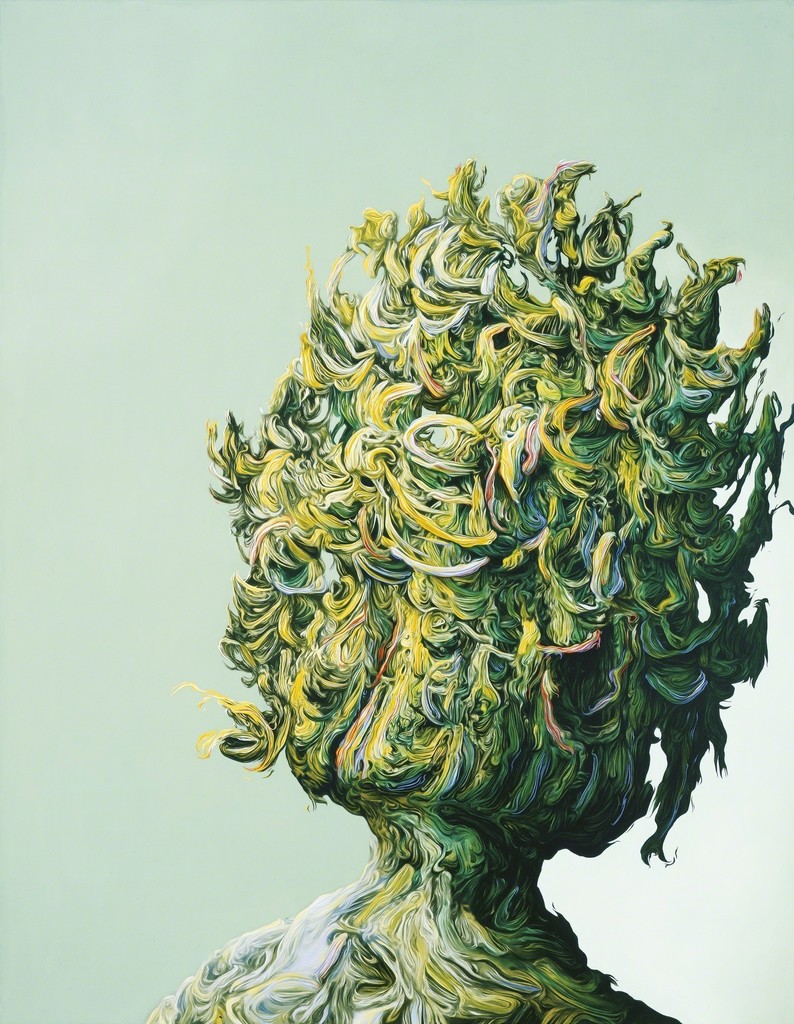
I like Glenn Brown, I think his modern take on Surrealism is interesting and I want to adopt some of his techniques into my art.

Glenn Brown – Deep Throat 2007

5th Session of CATS Tuesday 9th October 2018 Suprematism

Looked at Suprematism this week. This art movement was started in 1915 in Russia by Kazimir Malevich. It focused primarily on basic geometric forms such as squares, circles and lines painted in a range of colours. He developed in conjunction with his student El Lissitzky. Malevich was influenced by Cubism and Futurism.

Constructivism was started in 1913 in Russia by Vladimir Tatlin. It was a rejection of autonomous art and revolved around the idea of art being a ‘practice for social purposes’. Extract from http://www.google.co.uk/search?safe=active&ei=BI7AW7ODJI3ygQa33oLAAQ&q=constructivism+art&oq=co&gs_l=psy-ab.3.1.0i67k1l7j0i131k1l3.182884.183074.0.185242.2.2.0.0.0.0.162.286.0j2.2.0….0…1.1.64.psy-ab..0.2.286…0.0.rKnq2Bbs5ik

Wassily Kandinsky a colour theorist and is one of the first to have made a purely abstract art piece.

Piet Mondrian a Dutch painter and theoretician who was influenced by Cubism and Futurism.

Zaha Hadid influenced by Malevich. She said abstraction was moving away from certain social dogmas.

Composition with yellow, blue and red by Piet Mondrian 1937-1942.

4th Session of CATS Tuesday 2nd October 2018 Dadaism

This session we looked at the Dada movement which was started in Zurich, Switzerland in 1916. The movement was formed by artists, poets, musicians and freethinkers and was about being absurd and rebelling against everything that was going on at the time such as World War One. It was a ‘battle against reason’ and was a parody of the meaningless war at the time.

Famous artists who were part of Dada were: Hannah Hoch – who started photo montage, Tristan Zara, Marcel Duchamp, Salvador Dali, Raoul Hausmann, Meret Oppenheim and John Heartfield.

Dada has heavily influenced lots of modern day artists such as David Bowie, Monty Python, Peter Kennard and Banksy. It influenced the Punk movement during the 1970s.

Dada was a reaction to the bourgeoisie society and the war to make light of the situation and make fun of it. It shows how destruction is a way to create something new. When Dada ended many artists ‘jumped ship’ to the Sureallism movement.

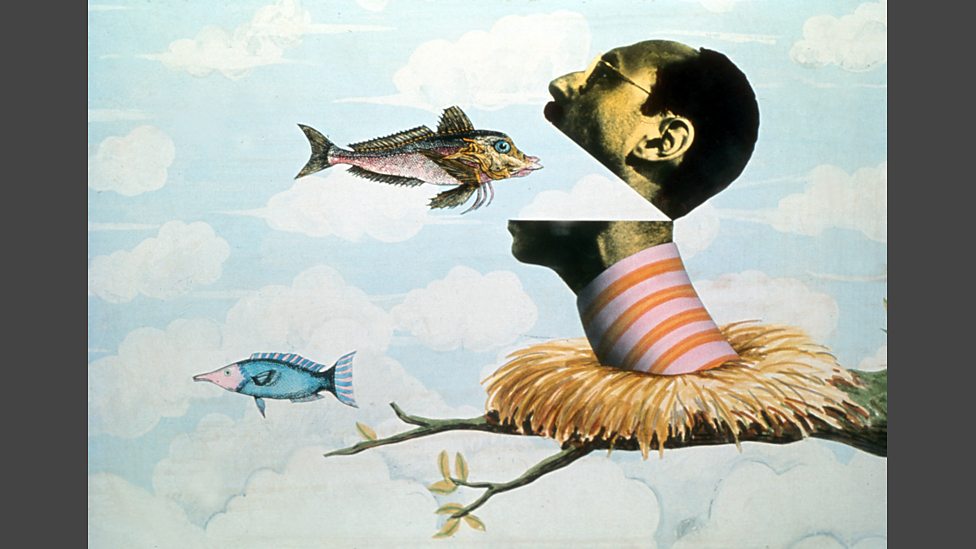
My research will be into Monty Python as I like their animation style, it is eavily based on Dada and I think it shows how the movement would have progressed had it not been abandoned by many of the original artists. I would like to focus on some of the techniques used in Dada in a future project.

Image result for monty python animation style

Terry Gilliam’s animation of a man eating a fish.

3rd Session of CATS Tuesday 25th September 2018 Futurism

Looked this week at the painting ‘Still Life Chair With Caning’ by Pablo Picasso in 1912. This painting was the beginning something different to the art world and is believed to be the first collage or one of the first in conjunction with Georges Braque. This new style of Cubism used found objects, flattened perspective and multiple viewpoints, it was a question of the elitism of art at the time and the difference between high and low art. Is it illusionistic and cheating?

Also looked at Futurism which developed around the time of Cubism and was influenced by it. The Futurists were based in Italy at the turn of the 20th century and they rejected all of the past. This included the Renaissance and the Baroque styles of art in Italy’s past. They instead focused on new technology, the way things moved and speed. The movement was lead by Fillipo Tommaso Marinetti and founded in 1909. The Futurists celebrated and supported World War One and the idea of destruction to pave the way for a new future. It reflected an emphasis on change, speed, noise, movement, machines, pollution and cities. Some other Futurists were Giamcomo Balla and Antonio Sant’Elia. Guilio Bragalia was a photographer at the time who was part of the movement. Another photgrapher at the time was Etienne-Jules Marey who used long shutter speeds to achieve the effects of movement. Umberto Boccioni was another Futurist who painted ‘The City Rises’ in 1910 an important painting as it pulled away from Cubism but also kept elements of it and included elements of Futurism.

Vorticism was another movement at the time, it was a short lived British movement from 1914-1917 and focused on the rejection of classic subjects like landscapes and nudes and focused instead on the machine and geometric shapes,  it leaned towards abstraction. It was lead and invented by Percy Wyndham Lewis.

Looked at Eadweard Muybridge and his photgraphy and focus on the movement of a subject.

The world at the turn of the 20th century was a time of turmoil as personal and artistic differences emerged. 1914 marked the start of WW1, Facism was beginning around this time and many Futurists enlisted in the army when Italy joined the war and many were killed.

The Futurist manifesto said “We will glorify war—the world’s only hygiene—militarism, patriotism, the destructive gesture of freedom-bringers, beautiful ideas worth dying for, and scorn for woman.” Extract from http://391.org/manifestos/1909-the-futurist-manifesto-f-t-marinetti.html#.W6oPg-SotPYImage result for futurism modern day

Umberto Boccioni – Simultaneous Visions 1912

2nd Session of CATS Tuesday 18th September 2018 Cubism

Looked today at Cubism mainly. Started in the early 20th century by Pablo Picasso, apparently he didn’t like it when he first created it. It was started when he painted Les Demoiselles d’Avignon in 1907. He was influenced by Paul Cezanne and he deconstructed objects and then pieced them together again to create the image like a collage.

Another founding member was Georges Braque who also reduced forms to jagged edges, shapes and flattened forms. They were also influenced by Fauvism and African artifacts that were brought back by the military in the expansion of the French empire.

Braque focused on the layering of shapes and viewpoints and this is the early form of Cubism. There are two main types of Cubism:

Analytical Cubism 1908 – 1912: This focused on the layering of shapes and viewpoints.

Synthetic Cubism 1912 – 1914: Brighter colours, simple shapes and almost no depth.

Pablo Picasso used collage and paint and gave multiple viewpoints .

Fernand Leger was influenced by Cezanne and he developed Tubism.

David Hockney was influenced by Cubism and he used this to create PearBlossom Highway, a collage made of hundreds of photographs.

Sohei Nishino also does a similar thing and takes hundreds of photos and creates landscapes with them.

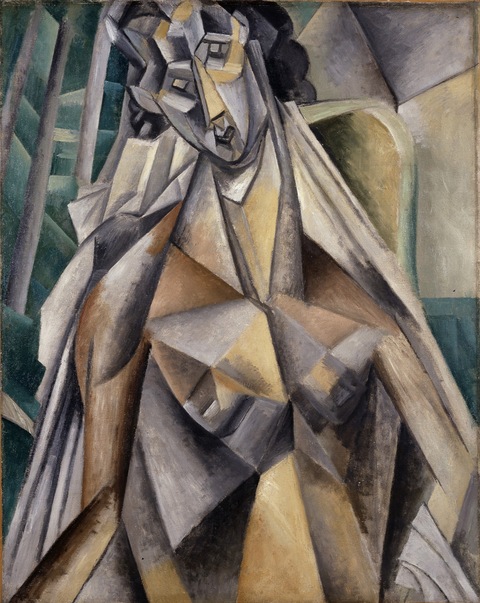
I like Picasso’s work personally, I find it very interesting. Whilst not my favourite, I would like to study his work further to gain more understanding into shapes and colour.


Pablo Picasso – Nude in an armchair 1909

Image result for cubism modern day

1st Session of CATS Tuesday 11th September 2018 Impressionism

Looked at 19th century French art and how it changed due to a group of painters in Paris known as the impressionists. Paris was seen as the centre of the art world as the modern age came around. The movement mainly credited to being started by Monet. Impressionism was about the raw chaning heart of life and was a response to the invention of photography which seemed to be replacing art in terms of capturing a moment.

Gustav Caillebotte – focused on his surroundings rather than people and used open composition.

Edgar Degas – subject of his paintings where fleetings moment of modern life.

Claude Monet – concerned with light and colour, times of day and month, beginning to be absract.

Paul Cezanne – played with impressionism and composition.

Toulouse Lautrec – embraced the city’s night life, avant-gard and bohemian lifestyle – focus on the Moulin Rouge.

Other impressionists included: Vincent Van Gogh, Eduard Manet and Auguste Renoir.

Looked at Japonism in the 1860s in France. Van Gogh’s wood cuts. Also looked at Post-impressionism main artist being Paul Gaugin and his representations of folklore with woodcuts and experimental use of colour.

Looked at Fauvism mainly Andre Derain and his use of unnatural colours to convey emotional meaning. Another artist to use meaning in colour is Henri Matisse.

Farida Hemly – Psychedelic Trees 2014

Image result for modern impressionism